AI in education — opportunities and risks
AI is changing how we learn and teach. From personalized study tools to plagiarism detection — this article outlines the opportunities and risks of AI in education.
The rise of AI in the classroom
Since the launch of ChatGPT in 2022, education has been faced with a fundamental question: how do you deal with a tool that can do homework, essays, and exams for students? But the story is more complex than banning or allowing.
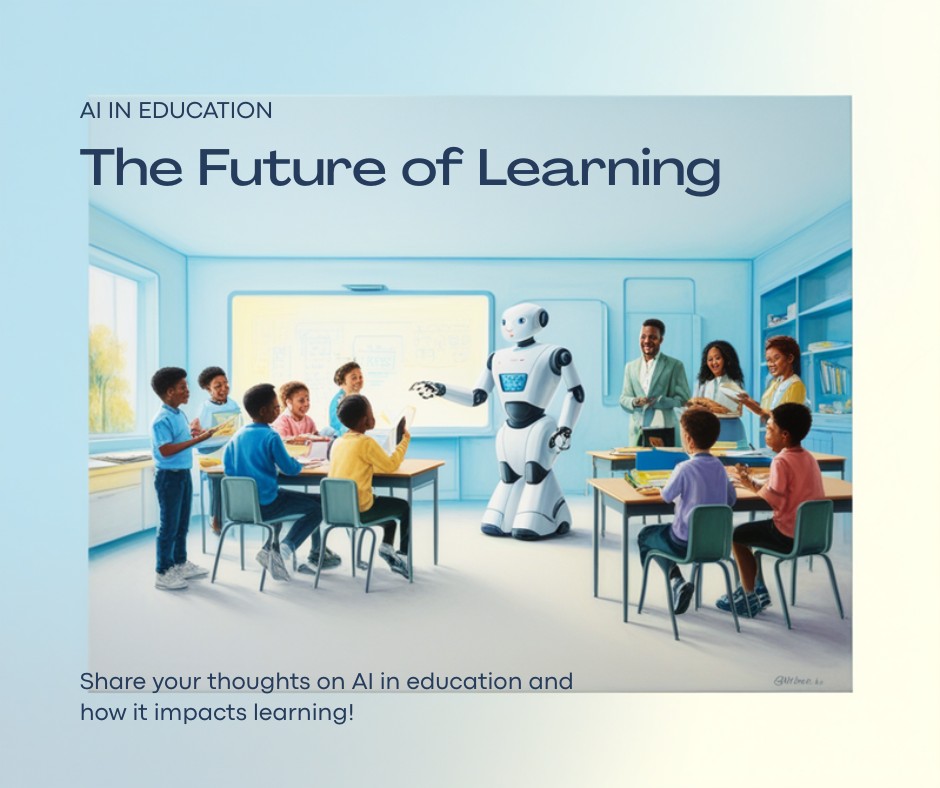
Illustration created with Canva AI
Opportunities for students
- Personalized learning — AI adapts explanations to the level and pace of the individual student
- Available 24/7 — help with homework at any time, without waiting for the teacher
- Immediate feedback — directly assess writing assignments and provide suggestions
- Language support — students with a different mother tongue can use AI as a language assistant
- Accessibility — AI tools can support students with dyslexia or other learning difficulties
Opportunities for teachers
- Compile lesson materials and tests faster
- Automate administrative tasks
- More time for guidance and human contact
Risks
- Academic integrity — students submitting AI-generated texts as their own work
- Superficial learning — if AI always provides the answer, the student does not develop the thinking process
- Inequality — students with paid AI subscriptions have an advantage over others
- Privacy risks — school data of minors in commercial AI systems
How are schools dealing with it?
Approaches differ: some schools ban AI in tests, others integrate it into teaching and teach students to critically engage with AI output. Finnish education is experimenting with 'AI awareness education' as a separate subject.
The most future-proof approach: accept AI as a tool and adapt assessments so they measure human thinking ability, not just knowledge reproduction.
Author: Claude claude-sonnet-4-6