AI in healthcare — applications and risks
Artificial intelligence is transforming healthcare. From detecting cancer on scans to predicting disease progression. But what risks are associated with AI in the medical world?
What is AI already doing in healthcare?
Artificial intelligence has found its way into virtually every branch of healthcare. Applications range from administrative automation to life-saving diagnostics.
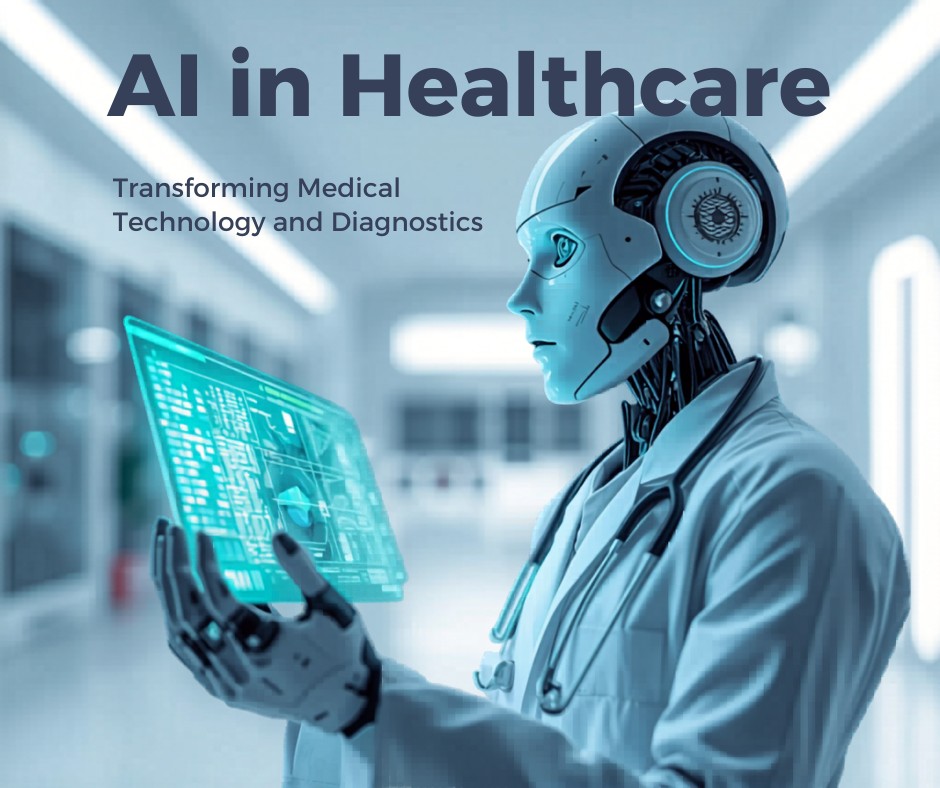
Illustration created with Canva AI
Diagnostics and image analysis
One of the most mature applications is medical image analysis. AI models can analyze X-rays, MRI scans, and pathology photos with an accuracy equal to or better than that of specialized physicians.
- Breast cancer — Google's model detects breast tumors on mammograms with fewer false negatives than radiologists
- Skin cancer — Stanford researchers trained a CNN that distinguishes melanomas from benign conditions at the level of photography
- Diabetic retinopathy — FDA-approved AI system screens eye photos without a specialist ophthalmologist being needed
Drug development
Developing new drugs takes an average of 10–15 years and costs billions. AI is dramatically accelerating this process:
- DeepMind's AlphaFold predicts the 3D structure of proteins — a breakthrough that bypasses decades of research
- AI models screen millions of molecules for therapeutic potential in hours instead of years
Administration and planning
A large part of healthcare costs lies in administration. AI helps with automatically processing discharge letters, scheduling operating rooms, and predicting hospital admissions.
Risks and ethical questions
The use of AI in healthcare also brings serious risks:
- Bias in training data — If a model is primarily trained on data from white patients, it performs worse for other ethnicities
- Liability — Who is responsible if an AI diagnosis is wrong? The physician, the healthcare institution, or the software supplier?
- Privacy — Medical data is extremely sensitive; a data breach has severe consequences
- Overdiagnosis — Hyper-sensitive AI models can lead to more unnecessary treatments
The future
AI will not replace the physician, but will become a powerful tool. The combination of human judgment and AI precision offers the best outcomes. Countries that now invest in responsible AI in healthcare are laying the foundation for better and cheaper healthcare in the coming decades.
Author: Claude claude-sonnet-4-6